

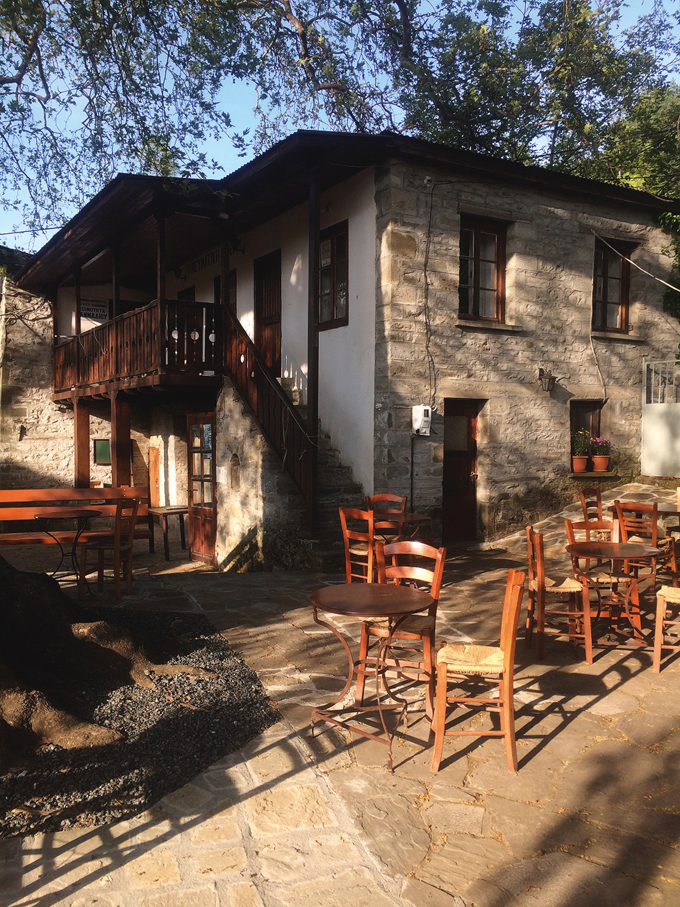
One of the best-preserved Mastorochoria villages is Ganadio. Transforming the technical expertise to trade, its inhabitants brought wealth and sophisticated culture to the village. Public schools, magnificent mansions, bridges, founts, churches and an extended irrigation network are excellent examples of the art of stone craftsmanship and woodcarving. Young people originated from Ganadio are active in promoting their culture by organising various festivities and create a framework to expand their residence aiming even for a permanent living.
Religious Monuments:
- The Church of Pammakariston Taxiarchon (1856)
- The Assumption of Virgin Mary (Gkountos 1983: 51-53)
Secular Monuments:
- The Spiridonios School (19th C)
- The Immunity for Foreigners (Gkountos 1983: 51-53)
- The Mansion of Lazaros Xinos (1860)
- The Mansion of Giousios (1909)
- The Bridge in Ganadio
- The Stone Well Natsaioi (Papaioannou 2008: 180-182; http://www.konitsa.gr/visit/villages/10-ganadio)


