

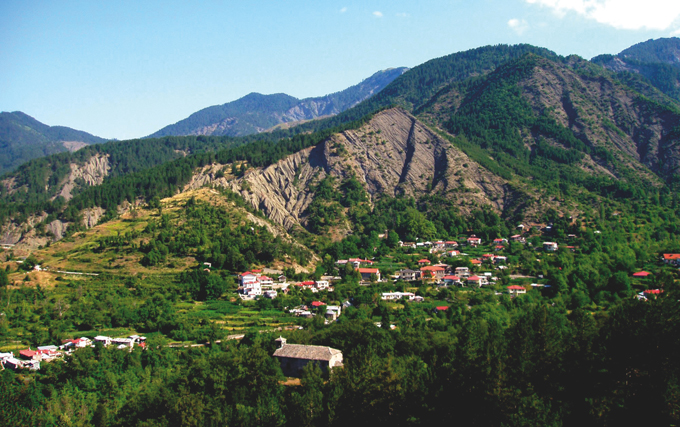
Although, Elefthero belongs to the unity of Aoos valley, it is not a vlach spoken village. The inhabitants were specialised in masonry craftsmanship and since the 16th century they built the foundations of both tangible and intangible myth of the famous 'Bouloukia'. During the WWII, the village was burned down, but monuments, such as bridges, churches and watermills, are still preserved. Trying to safeguard their heritage, the people from diaspora organise various festivities around the traditional coffee shop in the central square during the summer period.
Religious Monuments:
- Aghios Nikolaos
- Aghios Dimitrios (1858)
- The Church of Panaghia
- Aghios Minas
- Aghioi Anargyroi
- Aghios Georgios
- Aghios Athanasios
- Prophet Elias
- The Transfiguration of Christ (Papaioannou 2008: 143)
Secular Monuments:
- The Mill of Ntalas
- The Mill of Karpouzi
- The Mill of Barba
- The Watermill of Niskoreto (Giannoulidi, Maroutsi, Strashevska & Zafeiri 2014: 98; www.konitsa.gr/visit/villages/14-eleutero)


